News & Blogs
Building Better Outcomes for Every Child in Health and Social Care

The need to embrace technology across the health and local government landscape is clear. Our research within our Giving Children the Best Start in Life Whitepaper has revealed a compelling mandate for improved cross-sector collaboration, with stakeholders across health, social care, and education emphasising, in particular, the need for a more holistic view of children’s records across these care settings. Fragmented services often fail right from the start to provide support from pregnancy, through neonatal care, and into the family unit, particularly for families with young children whose needs may be intensified in the early years. Getting health and social care engagement right from the start will have a hugely positive effect on the child’s long-term health.
Deployment Strategy
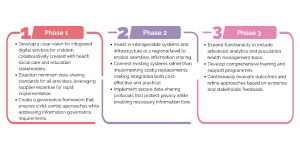
Realising this vision requires a roadmap built in clear, sequential phases:
Management Strategies
A successful implementation of integrated digital systems will require a robust change in management strategies. This includes:
- Leadership engagement by securing active sponsorship from leaders across health, social care, and education.
- Stakeholder involvement by engaging practitioners and service users in the design of digital solutions.
- Clear communication by developing consistent messaging around the benefits as well as the process of transformation.
- A comprehensive approach to training and support by including tailored training to different groups and roles. With ongoing support through superusers and champions, digital literacy programmes, and regular refreshers to ensuring all staff have the skills and confidence to use new systems effectively.
- Cultural transformation by addressing underlying attitudes and behaviours that might hinder integration.
Measuring Impact
To measure the impact of integrated digital services for children, we must establish clear success metrics which focus more on outcomes rather than outputs. These could include:
- Child-centred outcomes such as improvements in child health, wellbeing, development, and educational attainment.
- Service efficiency through reduced duplication, streamlined processes and more effective resource allocation.
- Practitioner experience through increased job satisfaction, reduced administrative burden and more time for direct work with children.
- Family experience through improved satisfaction, reduced need to repeat information and easier access to services.
- System-level impacts including earlier intervention, reduced emergency service use and better coordinated care
Maternity Care Excellence
Integrated digital systems can transform both Maternity and Neonatal care by creating a unified record that follows the mother and baby from pregnancy through to the postnatal period. This not only improves risk assessments but also supports early intervention to ensure a smooth transition between community and hospital services.
As Viktoria McMillan, Director of Maternity, Neonatal & Child Health at System C, explains: “Many children who do not require active care at birth may still need intervention within the first year. A comprehensive digital record helps bridge these gaps and supports families more effectively.”
This is an area which often gets overlooked, and starting the journey here can make a significant difference to the outcomes for mother and baby.
Clinical Workflow Optimisation and Patient Engagement
A key benefit of digital integration is the optimisation of clinical workflows. By reducing administrative tasks and supporting evidence-based decision-making at the point of care, digital systems enable faster referrals as well as better care transitions. Real-time communication ensures that healthcare professionals have critical information available.
Digital solutions should be designed with service users in mind. Increased visibility and transparency can make information easy to access. Digital solutions should empower families by granting them with self-management options.
An integrated system goes further than simply sharing data, it can also support comprehensive child health management.
With features including real-time immunisation tracking, growth monitoring and seamless integration, early signs of concern can be quickly identified and acted upon.
The importance of user-centred design is highlighted by Grace Murray, Lead Digital Midwife at South Tees NHS Foundation Trust, “You need to get the voices of the patients in (the design of digital systems) because they’ll tell you if it’s good or not and how accessible it is.”
Connecting social care with health services creates a more coordinated network for families. A unified system makes this possible by providing shared assessments that help to cut down repetition whilst also ensuring that safeguarding concerns are addressed. This holistic approach not only improves the experience for children and families but also strengthens communication among professionals working to support them. By putting all of these elements together, we can build an integrated digital framework that can ‘Give Children the Best Start in Life.’
Next Steps
Explore our extensive collection of blogs to stay informed, inspired and ahead of the curve. Whether you’re seeking expert advice, industry trends or thought-provoking perspectives, we have something for everyone.
Please get in touch with our friendly team of experts today. We’re here to assist you with any questions or concerns you may have.